Why Feedcast exists
You already have a podcast app you like. Your queue is in it, your history is in it, and your thumb knows where the buttons are. Every product that promises better episodes asks you to give that up and start again somewhere new, which is a strange price to pay for skipping a mattress advert.
Feedcast takes the other route. It changes the episode instead of the app. On your Mac it downloads each new episode, transcribes it, keeps or writes its chapters, cuts out the sponsor reads it finds, and publishes the result as an ordinary RSS feed. Then you subscribe to that feed in the app you were already using, and nothing else about your listening changes.
A Mac app, not a service
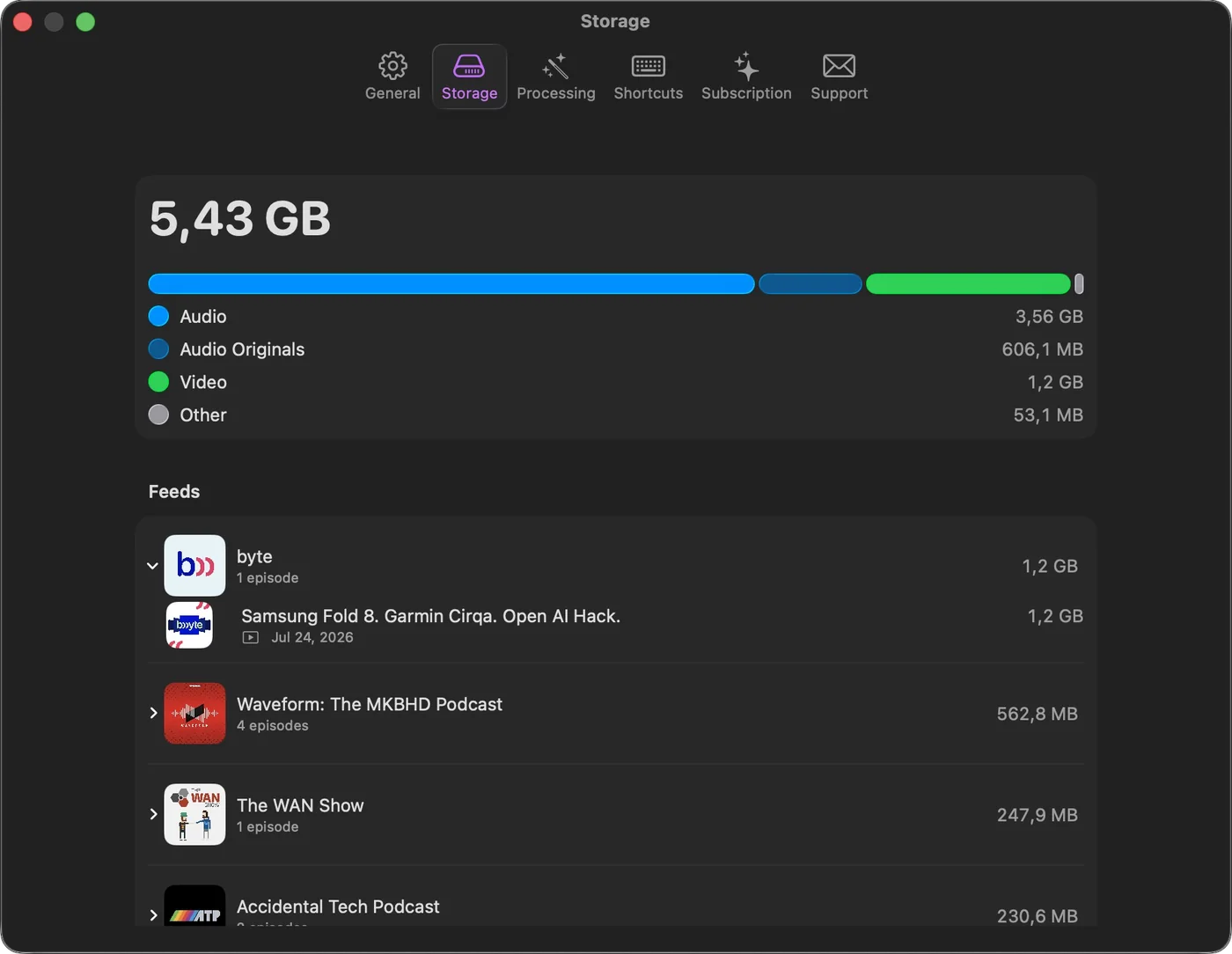
Feedcast is written in Swift and SwiftUI, and the work happens on your machine: the downloading, the transcribing, the cutting, the encoding, and the small server that hands the finished feed to your podcast app. There is no Feedcast account to make and nothing to sign in to.
That has a cost worth knowing about. Because your Mac is the one serving the episodes, it has to be awake and on the network when your phone goes to fetch one, which is why Feedcast suits people who leave a Mac running more than people who close a laptop at six.
Independent software
Feedcast is made by one student developer, with no investors, no advertising deals and no growth team. The free app is a real app: three feeds, on-device transcripts, playback and every library tool, with no time limit. Premium pays for the part that runs on its own, and for the servers behind it.
Questions, bug reports and ideas are welcome at contact@feedcast.org. You can also read the release history, work through the guides, or take verified facts and assets from the press kit.